Exploring Resist in Ceramics: Twine and Wax
This group of work explores resist techniques I’ve been developing over the years. I was interested in the balance of control and unpredictability, where each piece starts with a plan, but the surface can shift from structured to more organic depending on the process.
This series focuses on twine resist. I explored wax resist later as a separate approach. Both create contrast but behave very differently.
Twine Resist: Line and Form
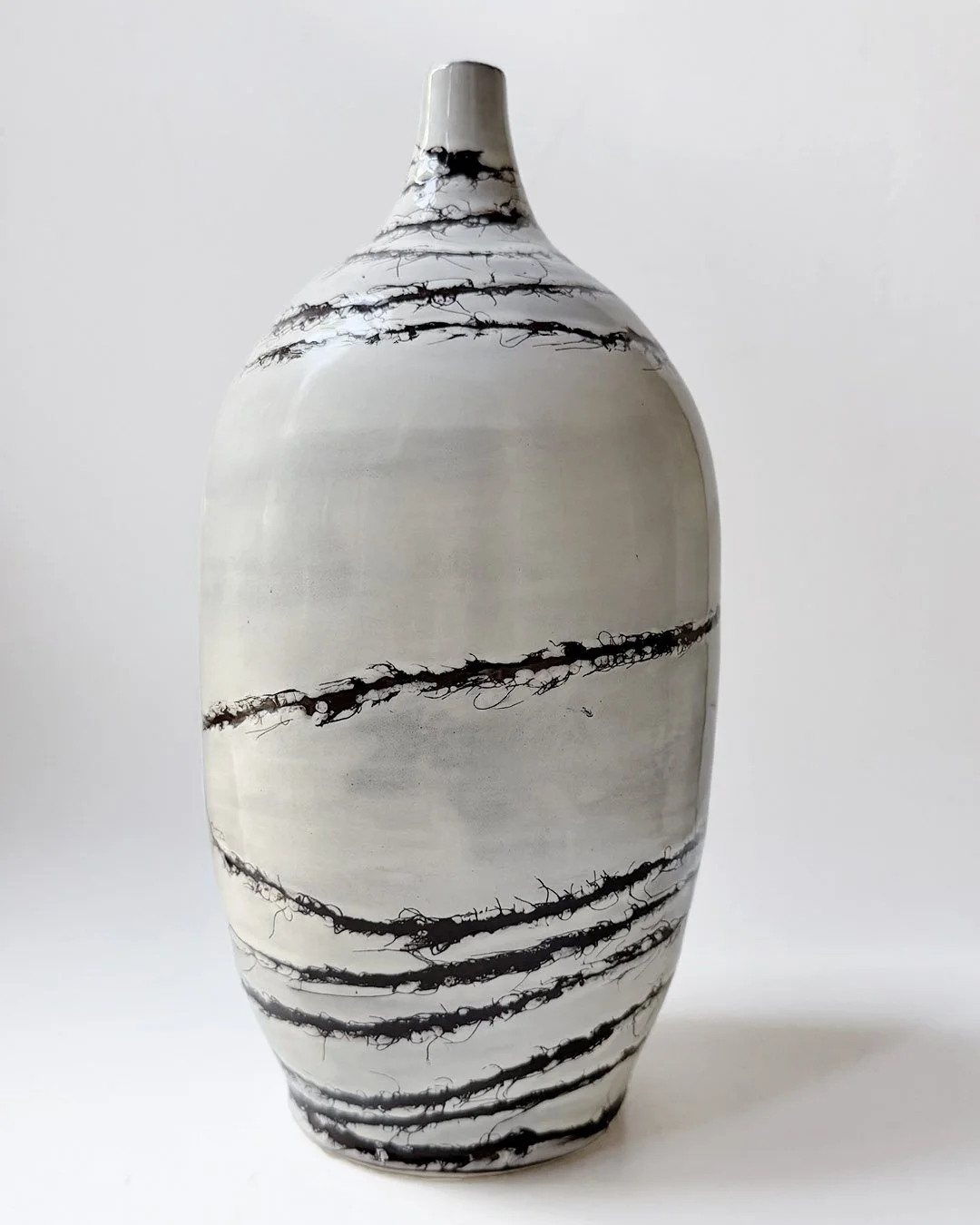
Tali 1
The taller vessels used a twine resist method that created layered, horizontal lines wrapping around the form. The process was straightforward, but it required several steps to achieve the final result.
I started with a dark brown base glaze. Once it set, I tightly wrapped twine around the vessel, adjusting the spacing and tension depending on how much of the surface I wanted to break up. I then applied two coats of a lighter glaze over the entire piece. Because of the darker base, some of it came through in the final firing, giving the surface a layered, washed effect.
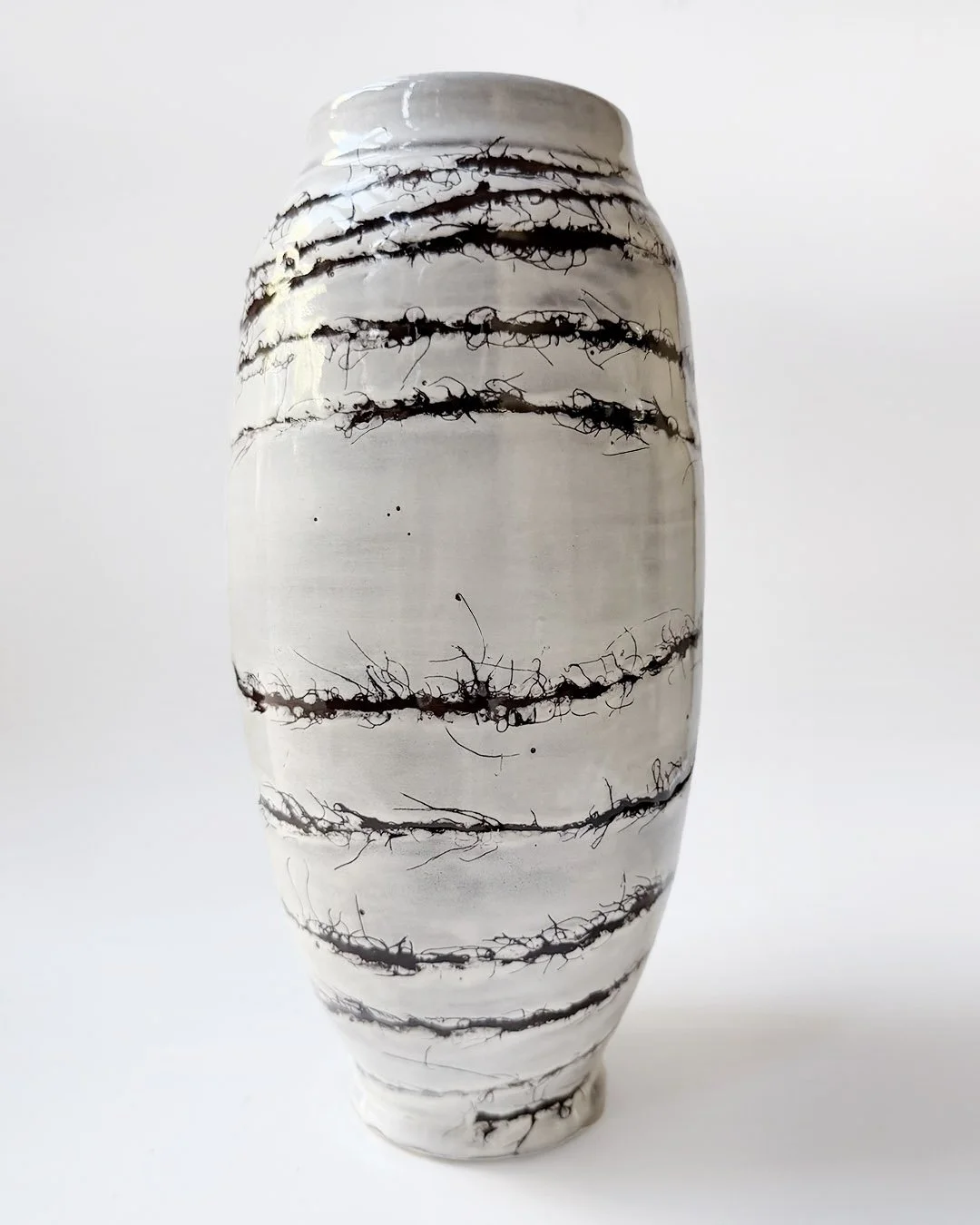
Tali 2
When I removed the twine, it revealed the darker base underneath. I chose a thicker, looser twine, which created wider, more open lines in the glaze. What I liked most was how those lines were not perfectly clean. They shifted, frayed, and moved slightly during firing, creating edges that felt more organic.
These pieces became a study in surface and loose pattern making. The lines followed the curve of the form, emphasizing its volume while also breaking it up visually. There was structure, but it never felt rigid.
Wax Resist: Pattern and Contrast
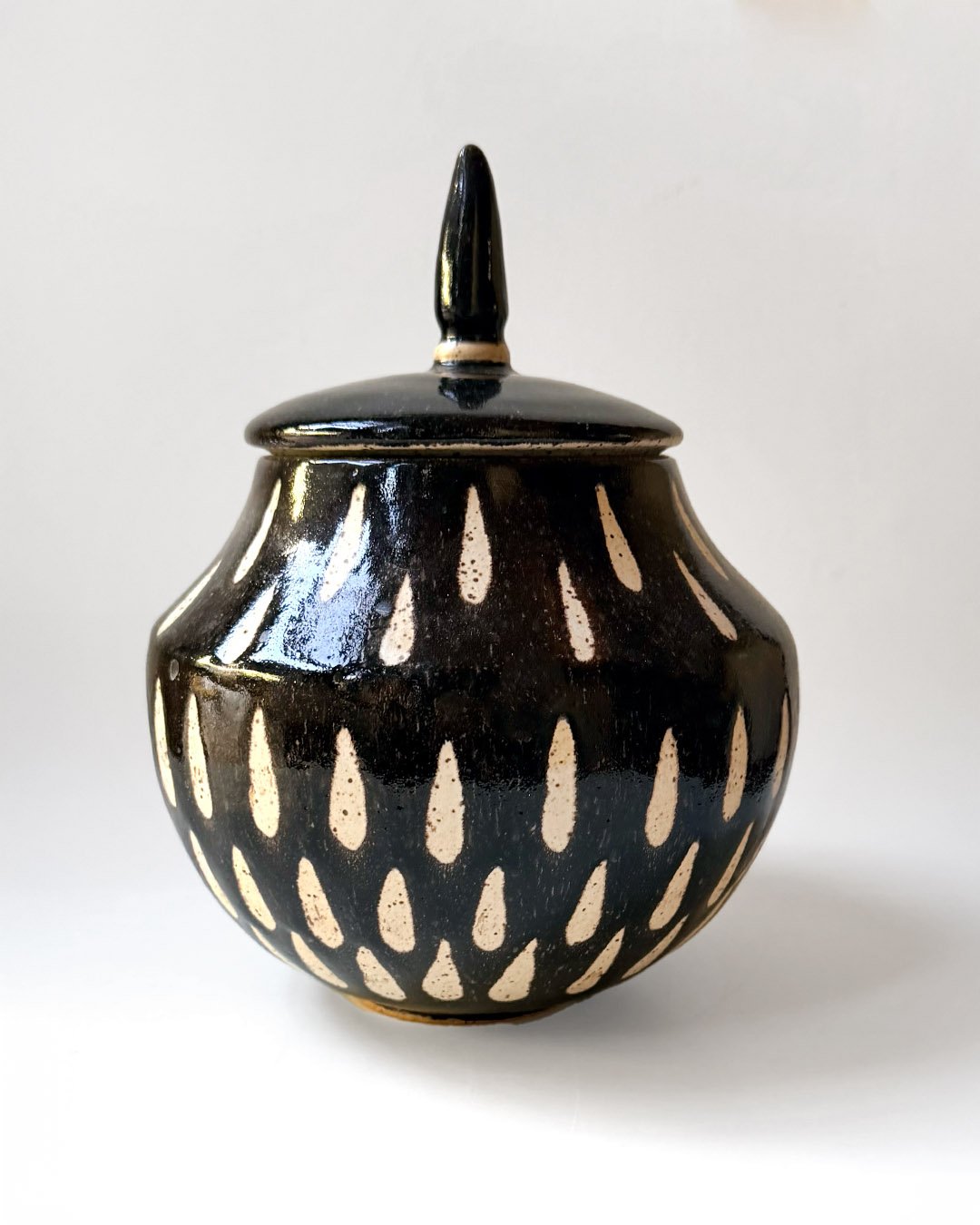
Ulan
The lidded jar takes a different direction.
For this piece, I used a wax resist directly on bisque fired speckled buff clay. Using a brush, I painted the pattern by hand and let it dry for about 30 minutes before dipping the entire vessel into a black gloss glaze. I don’t think I held it under a full 3 seconds, which left the final color a deep, dark brown that I really love.
Wherever the wax was applied, the glaze resists, revealing the natural clay body underneath.
This approach was more immediate, with a greater sense of control. It was less about wrapping and more about mark making. Each water drop shape was placed intentionally, and the hand painted marks carried subtle variations that gave the piece a one-of-a-kind result.
The contrast between the glossy dark glaze and the exposed clay gives the piece a stronger graphic presence. It reads more as pattern than texture.
Process as Surface
Both techniques are simple in concept, but they change how the surface design relates to the form.
Twine resist follows the shape of the vessel and creates movement that wraps around it.
Wax resist sits more on the surface and draws attention to specific areas, creating a more direct visual rhythm.
Together, they offer different ways to approach pattern and mark making.
Continuing the Exploration
This work continues an exploration of how resist techniques expand pattern and surface. They open up more possibilities for contrast and movement, with layering offering even more to explore.
For a full list of current available works, click button below.